Getting outdoors · Poole Harbour
Fishing & Shellfish in Sandbanks
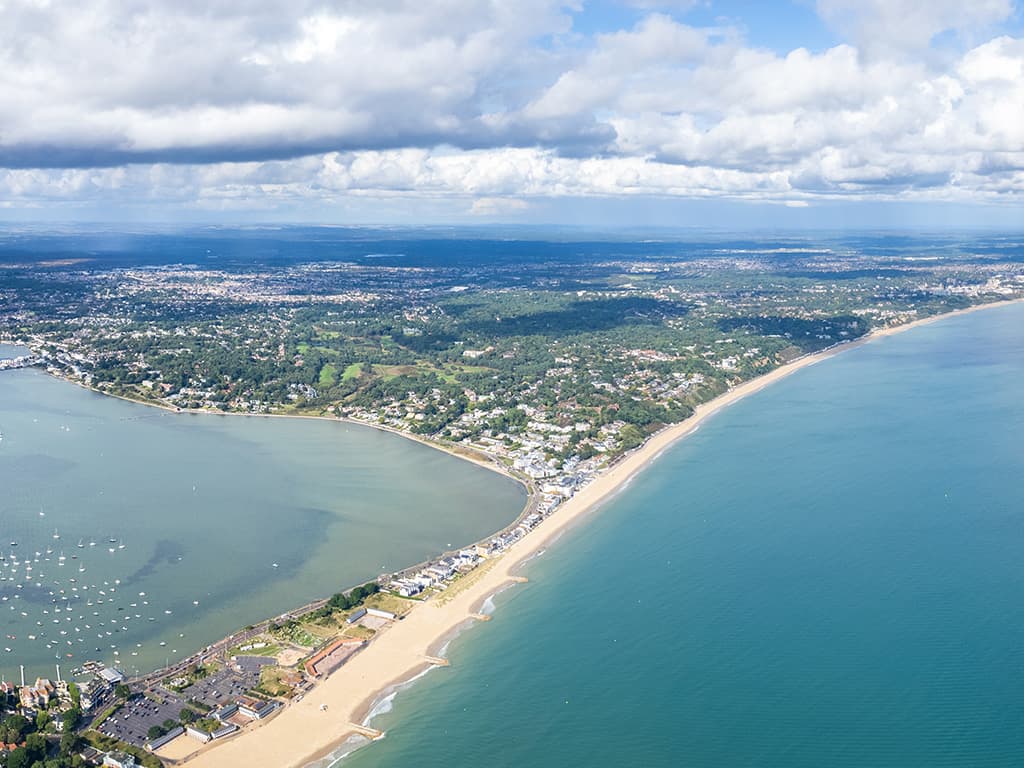
Sandbanks offers shore-angling opportunities on both the Poole Bay and harbour sides of the peninsula, while Poole Harbour supports important clam and cockle fisheries.
Fishing and shellfish gathering are regulated. Rules vary by species, season, method and exact location — check Southern IFCA and current MMO guidance before you fish or gather.
Sandbanks Peninsula Editorial
At a glance
- Activity
- Shore angling
- Location
- Sandbanks / Poole Harbour
- Popular regional catches
- Bass, black bream, pollack, squid, flatfish
- Main harbour shellfish
- Manila clam & common cockle
- Bass minimum
- 42 cm
- Rules
- Southern IFCA + MMO
- Last checked
- September 2026
Shore angling
Fishing in Sandbanks
Southern IFCA identifies Sandbanks among popular shore-angling locations in its district, alongside other Dorset and Solent marks.
The peninsula sits between Poole Bay and Poole Harbour. The open bay side tends to feel more exposed; the harbour side is more sheltered. Species interest, access and conditions differ — there is no single “Sandbanks mark” that behaves the same year-round.
Southern IFCA publishes district-wide recreational sea-angling guidance. Start with the recreational sea angling pages (opens in a new tab) and confirm current byelaws before you cast.
Marks & access
Where to fish around Sandbanks
Anglers use both the open Poole Bay / beach side and the more sheltered Poole Harbour side, including approaches around the harbour entrance and North Haven. Conditions and species interest differ between these environments.
Shore angling is practised along parts of the peninsula’s Poole Bay shoreline, but beach users, watersports and local access all matter. Do not fish in a way that endangers swimmers or other beach users, and check any local notices before casting.
Do not access private property, ferry infrastructure or unsafe structures. Poole Harbour and the entrance channels carry leisure and commercial traffic — keep clear of swimmers, watersports users and vessel routes, and treat tide state as part of your safety planning rather than only a bite-time question.
Catches
What fish can you catch?
Species targeted by anglers across the Southern IFCA district — including Dorset shore marks such as Sandbanks — include seabass, black seabream, pollack, squid and flatfish. Exact catches vary by mark, season and conditions.
Sea bass
Sea bass are among the popular rod-and-line species in the Southern IFCA district. Retention is tightly controlled — see bass rules for 2026 limits and the Poole Harbour nursery-area distinction for boats.
Black seabream
Black seabream appear among the species targeted by anglers across the district, including Dorset shore marks such as Sandbanks. Success varies by mark, season and conditions.
Flatfish
Flatfish are part of the regional catch mix from shore marks around Sandbanks and Poole Harbour. Exact species and size will depend on ground, tide and time of year.
Pollack
Pollack are listed among popular regional catches for shore anglers in the Southern IFCA district. Harbour and bay marks can behave differently — local knowledge helps.
Squid
Squid are also targeted by anglers across the district. Like other species here, what you encounter at Sandbanks depends on season, mark and conditions rather than a fixed calendar.
Licensing
Do you need a fishing licence?
Ordinary recreational sea angling from the shore is not subject to the Environment Agency freshwater rod licence. Fisheries legislation still applies: Southern IFCA byelaws, national species rules (including bass), minimum sizes, access restrictions and vessel-specific rules where relevant.
Recreational sea fishing from the shore does not use the Environment Agency freshwater rod licence. That does not mean fishing is unregulated — national and IFCA rules still apply.
Bass · 2026
Bass fishing rules
Recreational bass retention is tightly controlled. Use this summary as a quick check, then read the notes below and confirm on official guidance before you fish.
1 February–31 March
Catch and release
Rod and handline only — no retention
Outside that period
Up to 3 bass
Per fisher, per day
Minimum retained size
42 cm
Undersized fish must be released
Outside February and March, recreational fishers may retain up to three bass per person per day under 2026 recreational rules. Catch-and-release during February–March is limited to rod and handline. No bass may be taken by fixed or drift nets. Rules apply from shore or boat.
Confirm detail on MMO Bass Fishing Guidance 2026 (opens in a new tab) and Southern IFCA bass regulations (opens in a new tab).
Poole Harbour Bass Nursery Area
Active 30 April–1 November. The February–March catch-and-release period still applies everywhere for recreational fishers, including from the shore.
Shore angling
This nursery-area restriction is about fishing from a vessel. It does not mean bass fishing is banned from all Poole Harbour shores between 30 April and 1 November. The separate February–March catch-and-release period still applies everywhere for recreational fishers.
From a vessel
When the nursery area is active, bass must not be targeted from a vessel within the defined area. When fishing from a vessel in the active nursery area, sand eels must not be used as bait regardless of the target species.
Harbour gathering
Shellfish gathering around Poole Harbour
Southern IFCA identifies Manila clam and common cockle as the principal harvested shellfish species in Poole Harbour, with smaller quantities of other clam species.
Winter hand-gathering (defined areas)
From 1 November to 31 March inclusive, shellfish of any kind must not be taken by hand gathering or hand tool in defined areas within Poole Harbour. Check Southern IFCA’s current maps for the exact closed areas.
Cockle closed season
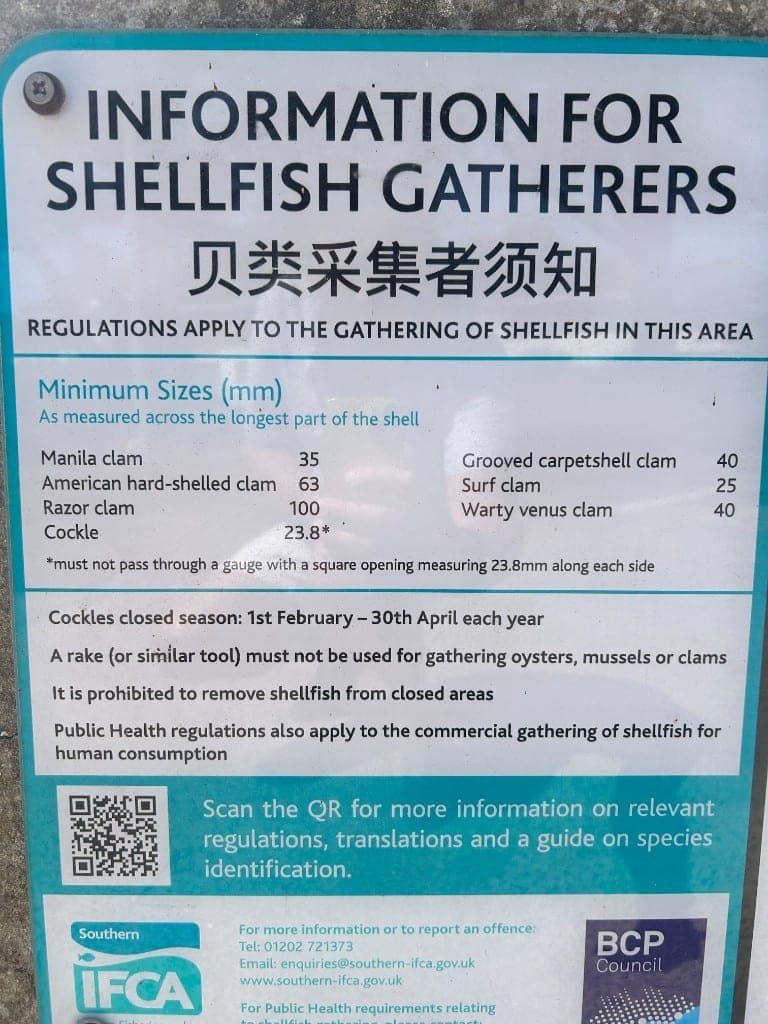
1 February–30 April inclusive
Separate from the November–March defined-area winter hand-gathering restriction.
Tools and rakes
Oysters, mussels and clams may only be fished for by handpicking or dredging under Southern IFCA’s Fishing for Oysters, Mussels and Clams Byelaw. Recreational hand gathering of clams is by handpicking — a rake or similar tool must not be used for clams.
Cockles are covered by a separate byelaw. Outside the cockle closed season, limited rake use may be permitted subject to head-width and tooth-spacing rules — always check the current Fishing for Cockles byelaw.
Seagrass beds
Southern IFCA’s Prohibition of Gathering (Sea Fisheries Resources) in Seagrass Beds Byelaw prohibits digging for or taking sea fisheries resources from prohibited seagrass areas. Check the interactive map before gathering. Southern IFCA interactive map (opens in a new tab).
Minimum sizes
Shellfish minimum sizes (MCRS)
Southern IFCA Minimum Conservation Reference Size Byelaw — verify on minimum sizes (opens in a new tab) and UK MCRS guidance (opens in a new tab). Current official guidance takes precedence over any local signage.
Manila clam
35 mm
Measured across the longest part of the shell
American hard-shelled clam
63 mm
Measured across the longest part of the shell
Razor clam
100 mm
Ensis spp.
Grooved carpetshell clam
40 mm
Measured across the longest part of the shell
Surf clam
25 mm
Measured across the longest part of the shell
Warty venus clam
40 mm
Measured across the longest part of the shell
Cockle
23.8 mm gauge
Must not pass through a gauge with a square opening measuring 23.8 mm along each side
| Species | Minimum size | Note |
|---|---|---|
| Manila clam | 35 mm | Measured across the longest part of the shell |
| American hard-shelled clam | 63 mm | Measured across the longest part of the shell |
| Razor clam | 100 mm | Ensis spp. |
| Grooved carpetshell clam | 40 mm | Measured across the longest part of the shell |
| Surf clam | 25 mm | Measured across the longest part of the shell |
| Warty venus clam | 40 mm | Measured across the longest part of the shell |
| Cockle | 23.8 mm gauge | Must not pass through a gauge with a square opening measuring 23.8 mm along each side |
Food safety
Is gathered shellfish safe to eat?
Legal permission to collect does not automatically mean shellfish are safe to eat. Public-health monitoring, classification and temporary closures can apply. Check current BCP / official public-health advice before eating self-gathered shellfish.
Start with Southern IFCA shore gathering (opens in a new tab), the Poole Harbour fisheries (opens in a new tab) pages and current BCP Council (opens in a new tab) public-health advice before eating self-gathered shellfish.
Stewardship
Responsible fishing and gathering
Legal permission to fish or gather is only the starting point. Respect size limits, closed seasons, gear rules and seagrass protections — and avoid disturbing other harbour users, swimmers and wildlife.
For broader context on birds, seals and harbour wildlife, see our wildlife and birdwatching around Sandbanks guide.
Questions
Fishing & shellfish FAQs
Open a question for the detail. All answers remain available in the page markup and structured data.
FAQSea fishing
FAQBass
FAQShellfish
FAQRules & safety
Trust note
Fishing and shellfish regulations can change. This guide was checked in September 2026. Always check Southern IFCA and current government guidance before fishing or gathering.